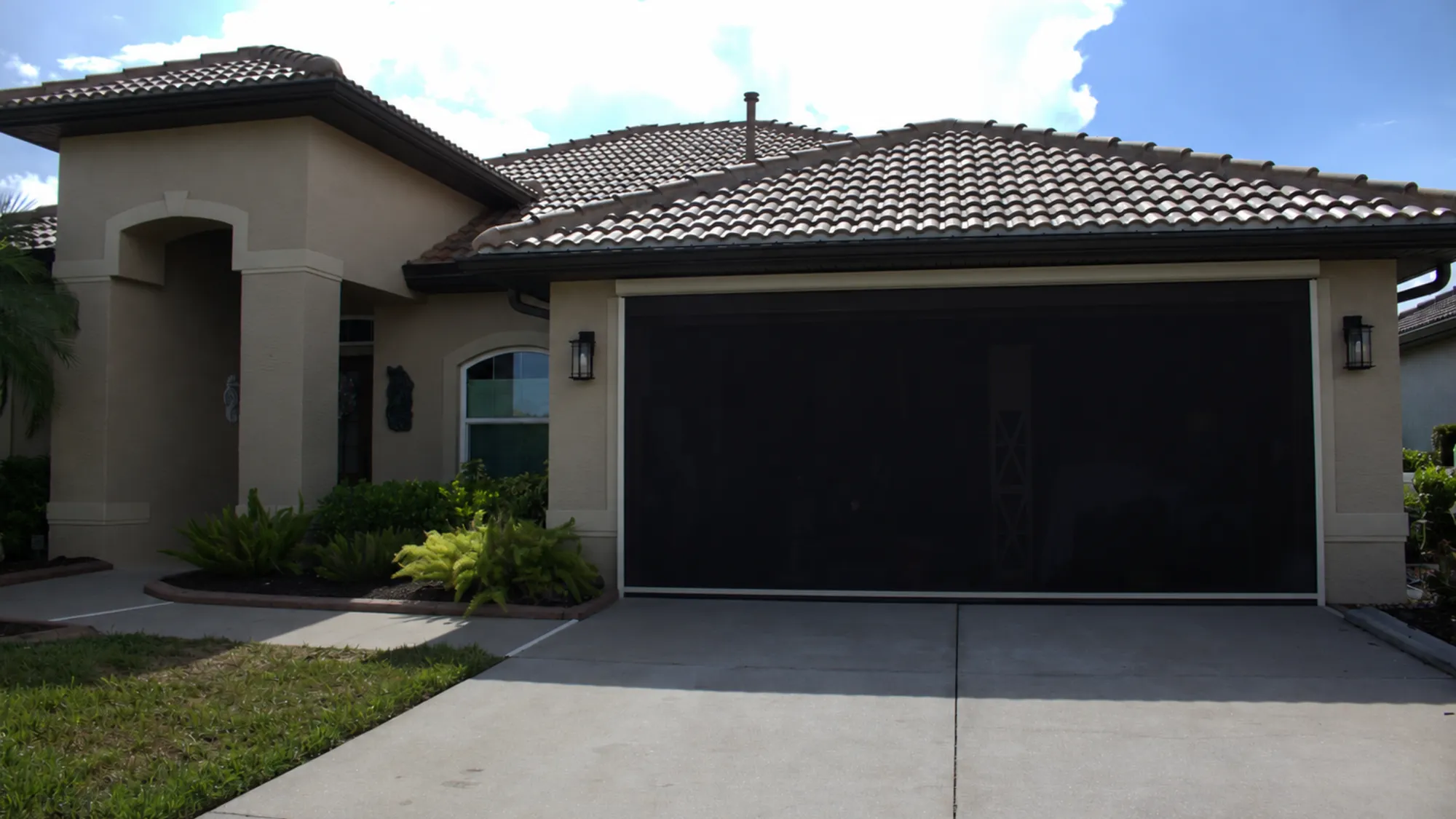
Motorized screens
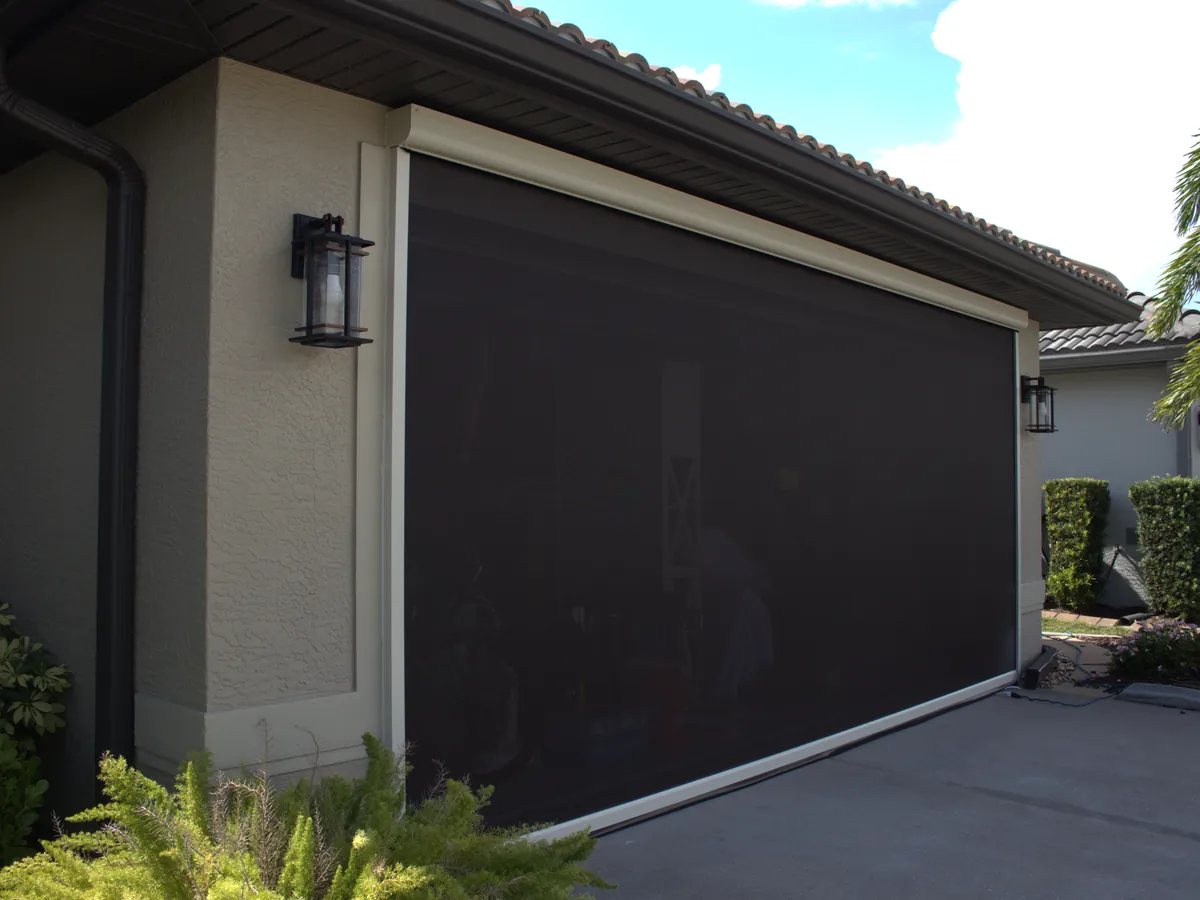
Three different systems, and the right one depends on what is actually bothering you. Sun and glare, insects, or a storm bearing down on an open lanai — each has a screen built for it, and we install all three. We will tell you which one your opening needs rather than quoting you the most expensive one.
Licensed Florida contractor · Lic. #CGC1538555 · Serving Southwest Florida
Three systems, three jobs
We install and service all three, so the recommendation is not shaped by what we happen to carry.
Open roller
A cable-guided screen with no side tracks to interrupt the opening. It is built for UV — cutting glare and dropping the temperature behind it — and it is the simplest and least expensive of the three. It is not an insect barrier and it is not storm equipment; it does one job and does it cleanly.
Motorized bug screen
A standard insect screen on a motor. It closes the opening against mosquitoes and no-see-ums at dusk and rolls back out of sight when you want the opening clear. This is the system for a lanai you want to use at seven in the evening in July.
Hurricane screen
Rated to 125 mph, woven from Kevlar-reinforced Omegatex mesh. Lowered, it closes the opening ahead of a storm; raised, it is out of the way for the rest of the year. It is the most substantial of the three and the only one engineered as storm protection.
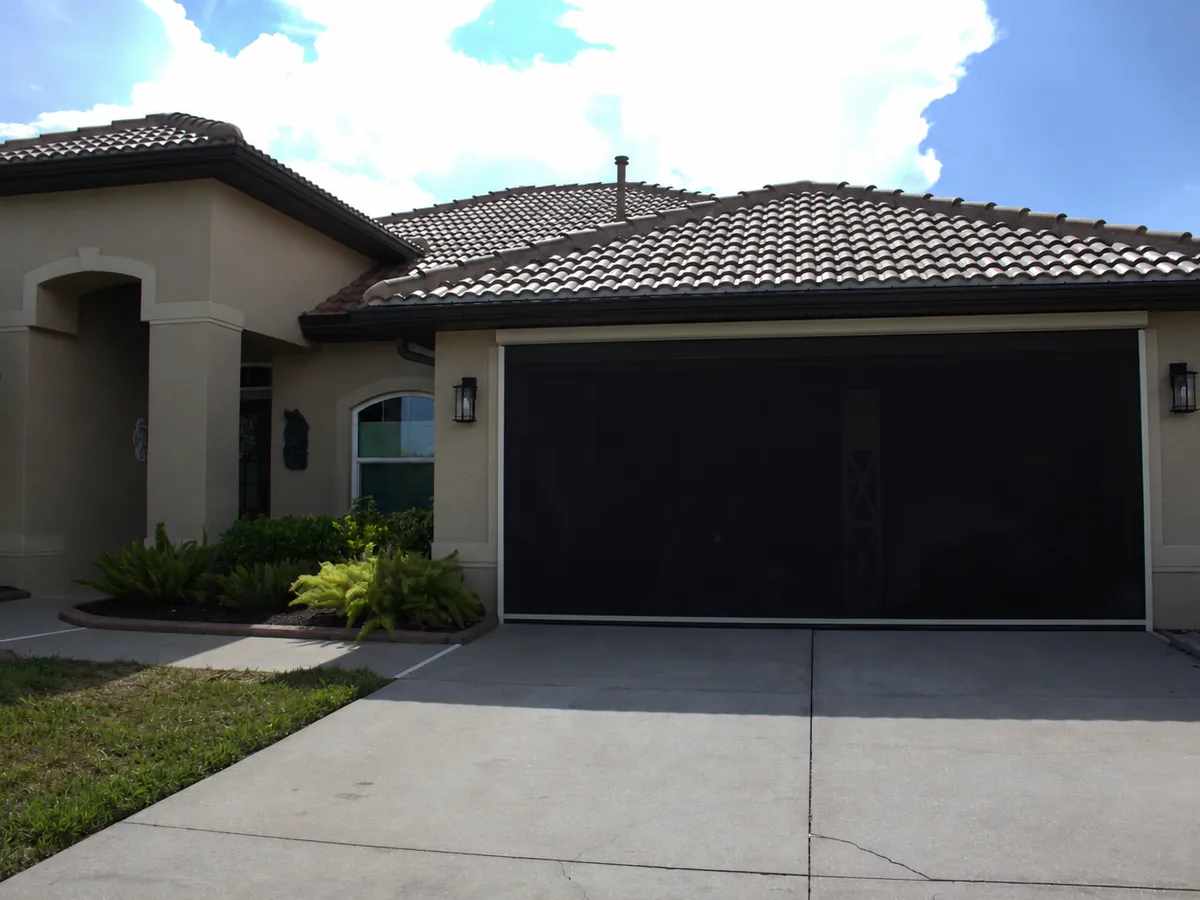
Engineered for the wind load, not just the opening
Every hurricane screen system is specified against the Florida Building Code wind loads for your parcel, with sealed drawings behind the design — the same standard we hold every structure to. The Omegatex mesh is rated to 125 mph and the framing is marine-grade aluminum, sized to the opening rather than pulled off a catalog sheet for an exposure it was never measured against.
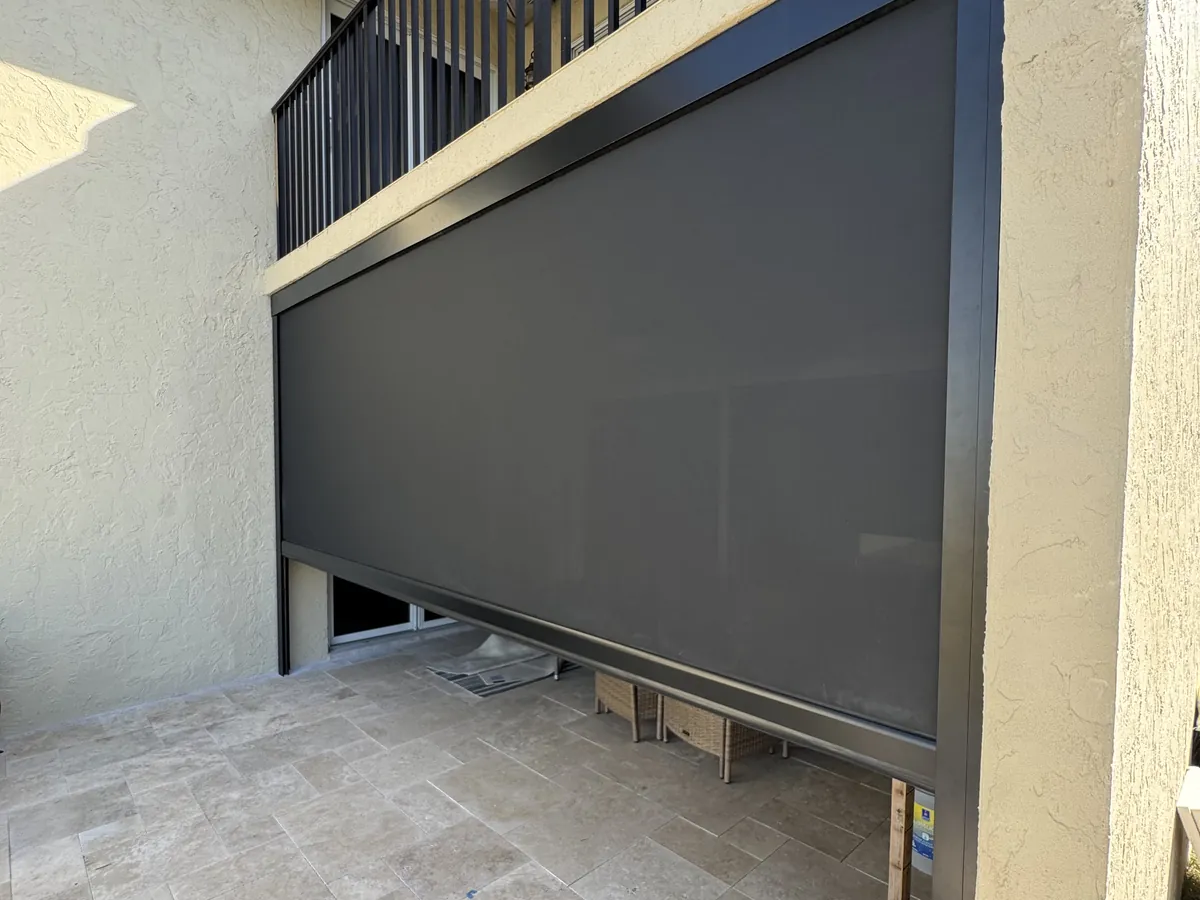
Fixed or motorized, at any budget
Fixed panels go up once and stay in place for storm season. Motorized screens raise and lower from a remote, a wall switch, or your phone. Between those two, and across the three systems above, there is a version of this that fits what you want to spend — a single open roller over a west-facing window is a different number from a motorized hurricane screen across a forty-foot lanai, and both are real answers. Tell us the budget at the consultation and we will tell you honestly what it buys.
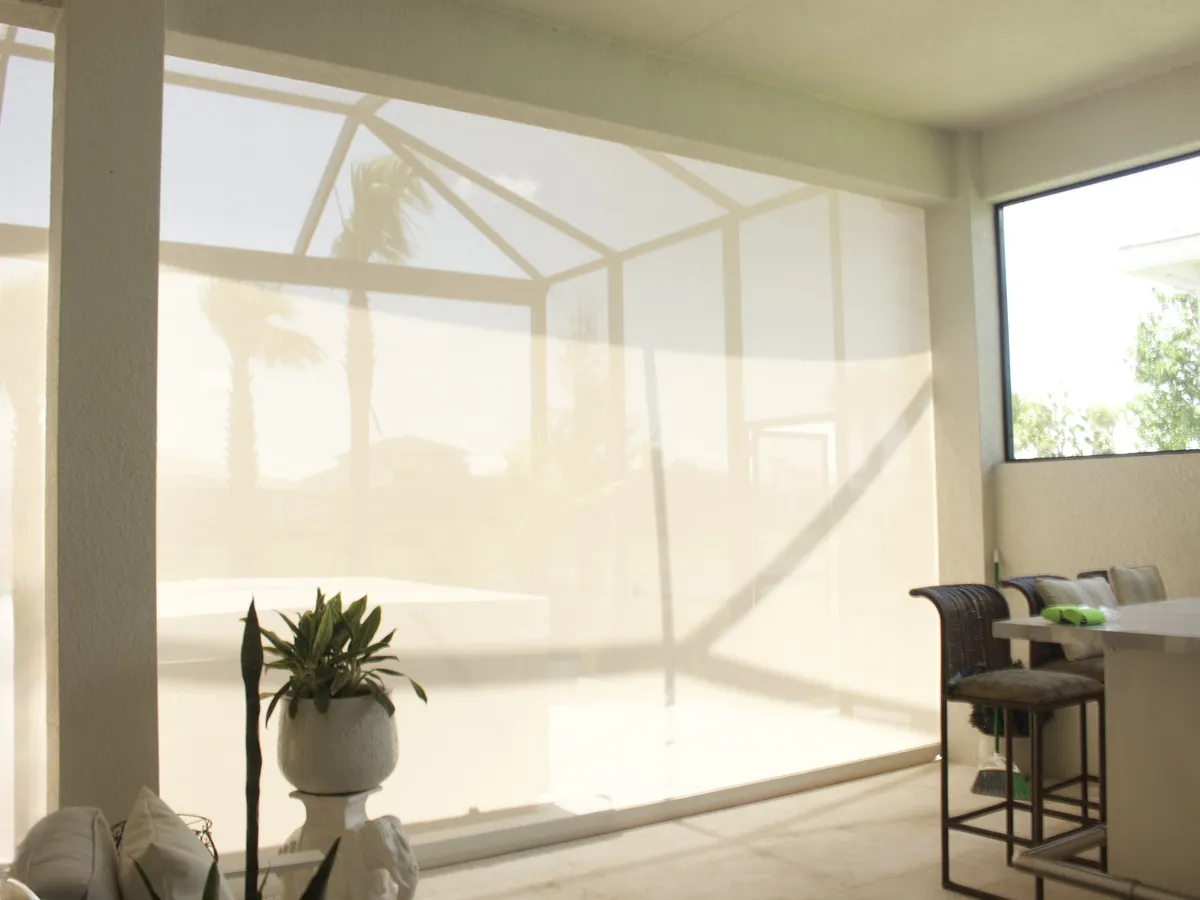
Sun and privacy
The dense sun fabrics block up to 99% of UV — enough to take the heat and glare off a west-facing lanai in the afternoon and to keep the furniture and the flooring behind it from fading. The same fabric buys privacy: from the outside the screen reads as a solid surface, while from inside you still see out. On a lanai that faces a neighbour or a street, that is often the reason people call rather than the sun. We bring samples so you can hold them up in your own light before choosing.
We build what it mounts to
Manufacturer dealers, window-treatment showrooms, and storm shutter companies each sell a piece of this — a screen, a shutter, an install. None of them build the structure it mounts to. Aluminum construction is our trade: the cages, the patio covers, the framing. So the screen gets recessed tracks, concealed housings, and wiring planned before installation day, on a structure we can reinforce ourselves if it needs it — instead of a system fastened to whatever happened to be there.
Start with a conversation, not a sales pitch
Common Questions
Which of the three systems do I need?
+
Start with what bothers you. Afternoon glare and heat on a west-facing lanai points to an open roller. Wanting to sit outside at dusk without being eaten points to a bug screen. An open lanai you have to worry about every time a storm forms in the Gulf points to a hurricane screen. Plenty of houses end up with more than one — an open roller on the west side and a hurricane screen across the main opening is a common pairing.
What's the difference between fixed and motorized hurricane screens?
+
Fixed panels are installed once and stay up through storm season. Motorized screens raise and lower on demand, so the same system gives you storm protection and everyday shade or privacy the rest of the year.
Do hurricane screens replace shutters?
+
They can — we'll walk the tradeoffs at your consultation. The right choice depends on the opening, the exposure, and how often you want to deploy it.
Can a motorized screen be added to an existing enclosure or lanai?
+
Usually, yes. We'll assess the structure at your consultation and tell you plainly if it needs reinforcement first — we're licensed for that work too.
What do motorized screens cost?
+
Typically $3,500–$9,000 installed per opening; multi-opening lanais commonly run higher. Every project gets a fixed quote after the design consultation — whether it's a hurricane-rated system or an everyday retractable screen — and the number we quote is the number you pay.
Serving Tampa Bay through Punta Gorda
How This Build Works
Assess the opening & exposure
We walk the site, measure the opening, confirm the wind-load zone, and check what the screen mounts to — reinforcing first if it needs it.
Engineered drawings, control layout & permit
Sealed drawings, a firm quote, remote/wall-switch/app control planned, and permits handled whenever the installation requires one — always the case for hurricane-rated systems.
Install & test
Mounted, wired, and tested with you — every screen run through its full cycle before we call it done.
Schedule a design consultation
Tell us about the structure and the parcel. We confirm the wind-load zone, walk the site, and scope the build to your address.